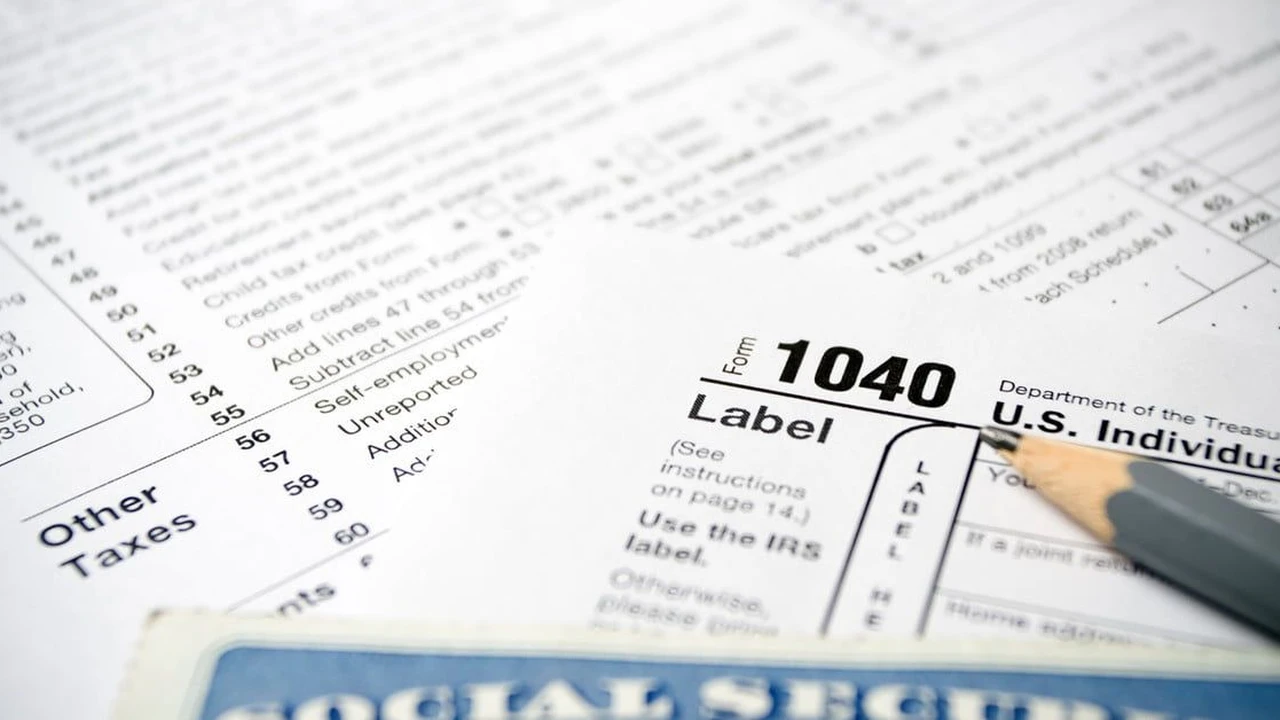
Top 5 Strategies to Prevent Future Tax Debt Effectively
Implement these 5 proven strategies to proactively prevent future tax debt and maintain financial health.
Implement these 5 proven strategies to proactively prevent future tax debt and maintain financial health.
Top 5 Strategies to Prevent Future Tax Debt Effectively
Hey there! Nobody likes the stress of tax debt, right? It can feel like a dark cloud hanging over your financial life. But what if I told you there are super effective ways to dodge that bullet and keep your finances sparkling clean? You bet there are! We're diving deep into the top 5 strategies that will not only help you prevent future tax debt but also boost your overall financial health. Think of this as your ultimate guide to becoming a tax-savvy superstar. Let's get started!
Strategy 1: Master Your Withholding and Estimated Payments to Avoid Tax Surprises
Alright, let's kick things off with one of the biggest culprits behind unexpected tax bills: incorrect withholding or estimated payments. Many folks get a nasty surprise come tax season because they haven't adjusted their W-4 or estimated payments properly. It's like driving a car without checking the fuel gauge – you're bound to run out eventually!
Understanding W-4 Adjustments for Employees
If you're an employee, your W-4 form is your best friend. This little piece of paper tells your employer how much federal income tax to withhold from each paycheck. The goal here is to have enough withheld so you don't owe a huge chunk of change at the end of the year, but not so much that you're giving the government an interest-free loan. It's a delicate balance, but totally achievable.
When to review your W-4:
- New Job: Always fill out a new W-4 accurately.
- Life Changes: Marriage, divorce, having a child, buying a home – these all impact your tax situation.
- Second Job or Side Hustle: If you have multiple income sources, you'll need to adjust your W-4s or make estimated payments.
- Significant Income Increase/Decrease: A big raise or a pay cut means your withholding needs a tweak.
The IRS has a fantastic Tax Withholding Estimator tool. Seriously, use it! It's free, easy to use, and gives you a personalized recommendation on how to adjust your W-4. It asks a few questions about your income, deductions, and credits, then tells you exactly what to put on your W-4. No more guesswork!
Navigating Estimated Taxes for Self-Employed and Gig Workers
Now, if you're self-employed, a freelancer, or a gig worker, the W-4 isn't for you. Instead, you're responsible for making estimated tax payments throughout the year. The IRS expects you to pay income tax, self-employment tax (Social Security and Medicare), and any other taxes as you earn your income. If you don't, you could face penalties. Ouch!
Estimated tax payment due dates (for most calendar-year taxpayers):
- April 15: For income earned January 1 to March 31
- June 15: For income earned April 1 to May 31
- September 15: For income earned June 1 to August 31
- January 15 (of next year): For income earned September 1 to December 31
How to calculate estimated taxes:
This can be a bit trickier, especially if your income fluctuates. You'll need to estimate your total income, deductions, and credits for the year. Many self-employed individuals use their previous year's tax return as a starting point, then adjust for any expected changes. The IRS Form 1040-ES, Estimated Tax for Individuals, includes a worksheet to help you figure this out. Again, the IRS Tax Withholding Estimator can also be helpful here.
Tools and Software for Estimated Payments:
- QuickBooks Self-Employed: This is a lifesaver for many freelancers and small business owners. It tracks income and expenses, helps categorize transactions, and even estimates your quarterly taxes. It can also help you find potential deductions. Plans start around $15/month.
- FreshBooks: Similar to QuickBooks, FreshBooks offers invoicing, expense tracking, and reporting features that can make estimated tax calculations much simpler. It's particularly popular with service-based businesses. Pricing starts around $15/month.
- H&R Block Tax Software (Self-Employed Edition): While primarily for filing, their self-employed software often includes tools to help you plan for estimated taxes throughout the year. You can usually purchase it for a one-time fee, typically $50-$100.
- TaxAct Self-Employed: Another strong contender for self-employed individuals, offering robust features for income and expense tracking, and estimated tax calculations. Similar pricing to H&R Block.
Pro Tip: If you're unsure, it's often better to slightly overpay your estimated taxes. You'll get the excess back as a refund, and you avoid underpayment penalties. Just don't overpay so much that it impacts your cash flow!
Strategy 2: Embrace Meticulous Record Keeping for Flawless Tax Reporting
Okay, this might not sound like the most exciting strategy, but trust me, it's a game-changer. Good record-keeping is the backbone of preventing tax debt. Imagine trying to bake a cake without knowing how much flour or sugar you've added – disaster, right? The same goes for your taxes. Without proper records, you're flying blind, making errors more likely and making it impossible to defend yourself if the IRS comes knocking.
What Records to Keep and For How Long
The general rule of thumb is to keep records for at least three years from the date you filed your original return or two years from the date you paid the tax, whichever is later. However, for certain situations, like if you underreported income by a substantial amount (25% or more), the IRS has six years to assess additional tax. And if you never filed a return or filed a fraudulent one, there's no statute of limitations. So, when in doubt, keep it longer!
Key records to keep:
- Income Records: W-2s, 1099s (1099-NEC, 1099-MISC, 1099-K, etc.), K-1s, bank statements showing deposits, sales receipts, invoices.
- Expense Records: Receipts for business expenses, medical expenses, charitable contributions, home improvement costs, mileage logs, utility bills, credit card statements.
- Deduction and Credit Documentation: Mortgage interest statements (Form 1098), student loan interest statements, childcare receipts, education expense statements.
- Asset Records: Purchase and sale documents for homes, vehicles, investments, and other significant assets.
- Previous Tax Returns: Always keep copies of your filed tax returns.
Digital vs Physical Record Keeping Solutions
In today's digital age, you have options! You don't need a mountain of paper files (unless you prefer that). Digital records are often more secure, easier to organize, and accessible from anywhere.
Digital Record Keeping Tools:
- Evernote / OneNote: Great for digitizing receipts. Snap a photo, tag it, and store it. Both offer free tiers with paid upgrades for more storage/features.
- Google Drive / Dropbox / OneDrive: Cloud storage solutions where you can create folders for each tax year and upload all your scanned documents. Free basic storage, with paid plans for more space (e.g., Google Drive 100GB for $1.99/month).
- Expensify / Receipt Bank (Dext Prepare): These apps are specifically designed for expense tracking. You snap a picture of a receipt, and they extract the data, categorize it, and store it. Expensify offers a free personal plan; business plans start around $5/user/month. Dext Prepare starts around $20/month.
- Accounting Software (QuickBooks, Xero, FreshBooks): As mentioned before, these are fantastic for small businesses. They integrate with bank accounts, categorize transactions, and generate reports, making tax time a breeze. Xero starts around $13/month.
Physical Record Keeping Tips:
- Dedicated Filing System: Use clearly labeled folders for each tax year and categories (e.g., 'Income,' 'Medical,' 'Charity').
- Fireproof Safe: For critical documents like past tax returns, property deeds, and birth certificates.
- Regular Maintenance: Don't let receipts pile up. Dedicate 15-30 minutes each week or month to organize your records.
Why this matters: If you ever get audited, having organized, complete records is your best defense. It shows the IRS you're diligent and helps substantiate your claims, potentially saving you from additional taxes, penalties, and interest.
Strategy 3: Proactive Tax Planning and Leveraging Deductions and Credits for Savings
This is where you go from being a passive taxpayer to an active participant in your financial future. Tax planning isn't just for the super-rich; it's for anyone who wants to minimize their tax burden legally and effectively. It's about making smart financial decisions throughout the year, not just scrambling at tax time.
Maximizing Deductions to Reduce Taxable Income
Deductions reduce your taxable income, meaning you pay tax on a smaller portion of your earnings. Every dollar you deduct is a dollar less the IRS can tax. It's like getting a discount on your tax bill!
Common deductions to consider:
- Standard Deduction vs. Itemized Deductions: For many, the standard deduction is sufficient. But if your itemized deductions (mortgage interest, state and local taxes (SALT) up to $10,000, medical expenses over 7.5% of AGI, charitable contributions) exceed the standard deduction, itemizing can save you money.
- IRA Contributions: Traditional IRA contributions can be tax-deductible, reducing your current year's taxable income.
- Health Savings Account (HSA) Contributions: If you have a high-deductible health plan, HSA contributions are triple-tax advantaged: tax-deductible, grow tax-free, and withdrawals for qualified medical expenses are tax-free.
- Student Loan Interest: You can deduct up to $2,500 in student loan interest paid.
- Self-Employment Deductions: If you're self-employed, you have a treasure trove of potential deductions: home office, business mileage, health insurance premiums, qualified business income (QBI) deduction, business expenses, etc.
Utilizing Tax Credits to Directly Reduce Tax Liability
Tax credits are even better than deductions because they directly reduce the amount of tax you owe, dollar for dollar. A $100 credit means $100 less in your tax bill. Some credits are even refundable, meaning if the credit reduces your tax liability below zero, you get the difference back as a refund!
Powerful tax credits to explore:
- Child Tax Credit: Up to $2,000 per qualifying child, with up to $1,600 being refundable.
- Earned Income Tax Credit (EITC): A refundable credit for low-to-moderate income working individuals and families. The amount varies significantly based on income and number of children.
- Education Credits: American Opportunity Tax Credit (AOTC) and Lifetime Learning Credit (LLC) can help offset college expenses. AOTC is partially refundable.
- Child and Dependent Care Credit: For expenses paid for the care of a qualifying individual to allow you to work or look for work.
- Retirement Savings Contributions Credit (Saver's Credit): For low- and moderate-income taxpayers who contribute to retirement accounts.
- Clean Energy Credits: For things like installing solar panels or purchasing electric vehicles.
When to seek professional advice:
If your financial situation is complex (e.g., you own a business, have investments, or significant life changes), consulting with a Certified Public Accountant (CPA) or an Enrolled Agent (EA) is a smart move. They can help you identify all eligible deductions and credits and create a year-round tax plan. Expect to pay anywhere from $200 to $1,000+ for comprehensive tax planning services, depending on complexity.
Strategy 4: Build an Emergency Fund Specifically for Unexpected Tax Bills
Life happens, and sometimes, despite your best efforts, an unexpected tax bill can pop up. Maybe you had a great year with a bonus, sold some stock, or simply miscalculated. Whatever the reason, having a dedicated emergency fund for taxes can be a huge stress reliever and prevent you from falling into debt.
Why a Tax-Specific Emergency Fund is Crucial
Think of it as your financial safety net. If you suddenly owe more than you expected, you won't have to dip into your regular emergency fund (which is for things like job loss or medical emergencies) or worse, put it on a high-interest credit card. That's a fast track to tax debt!
Benefits of a tax emergency fund:
- Avoid Penalties and Interest: Paying on time means no late payment penalties or interest charges.
- Peace of Mind: Knowing you're prepared for the unexpected is priceless.
- Protects Other Savings: Your other financial goals (retirement, down payment) remain untouched.
- Flexibility: If you don't use it for taxes, it can roll over to next year or be reallocated to other financial goals.
How to Build and Maintain Your Tax Savings
Building this fund doesn't have to be overwhelming. Start small and be consistent.
Steps to take:
- Estimate Your Potential Tax Liability: Use the IRS Tax Withholding Estimator or consult with a tax professional to get a ballpark figure of what you might owe.
- Set a Target Amount: Aim to save at least 10-20% of your gross income, especially if you're self-employed or have significant investment income. Adjust this based on your personal situation.
- Automate Your Savings: Set up an automatic transfer from your checking account to a separate savings account each payday or month. Even $25-$50 a week adds up quickly.
- Use a High-Yield Savings Account: Keep this money in an account that earns a decent interest rate. While not a huge earner, every little bit helps.
- Review Regularly: Revisit your savings goal and contributions periodically, especially after major income changes or life events.
Recommended High-Yield Savings Accounts (HYSA):
- Ally Bank Online Savings Account: Consistently offers competitive interest rates (often 4.00% APY or higher), no monthly fees, and easy online transfers. Great customer service.
- Discover Bank Online Savings Account: Another strong contender with excellent rates, no monthly fees, and 24/7 customer support.
- Capital One 360 Performance Savings: Good rates, no fees, and seamless integration if you already bank with Capital One.
- Marcus by Goldman Sachs Online Savings Account: Offers competitive rates, no fees, and a user-friendly interface.
These accounts are FDIC-insured, so your money is safe. The key is to keep this money separate from your everyday checking account so you're not tempted to spend it.
Strategy 5: Stay Informed About Tax Law Changes and Seek Professional Guidance
Tax laws are not static; they change! Sometimes subtly, sometimes dramatically. What was true last year might not be true this year. Staying informed is your secret weapon against unexpected tax debt.
Monitoring IRS Updates and Tax News
You don't need to become a tax lawyer, but a basic understanding of major changes can save you a lot of headaches. The IRS website is your primary source for official information.
How to stay informed:
- IRS.gov: Regularly check the 'Newsroom' and 'Tax Reform' sections. Sign up for IRS email updates.
- Reputable Financial News Outlets: Follow major financial news sources (e.g., Wall Street Journal, Bloomberg, Forbes, NerdWallet, Investopedia) that cover tax law changes.
- Tax Software Updates: If you use tax software, they usually update their programs to reflect the latest laws and often send out newsletters.
- Professional Tax Blogs/Newsletters: Many CPAs and tax firms publish blogs or newsletters summarizing key changes.
When and Why to Consult a Tax Professional
While DIY tax preparation is fine for simple returns, there are times when a professional is invaluable. Think of it like this: you can change your own oil, but you'd take your car to a mechanic for a major engine overhaul. Your taxes are your financial engine!
Situations where a tax professional is highly recommended:
- Major Life Changes: Marriage, divorce, birth of a child, buying/selling a home, starting a business, retirement.
- Complex Investments: Stock options, cryptocurrency, rental properties, foreign investments.
- Self-Employment Income: Especially if it's your primary income source.
- Receiving an IRS Notice or Audit Letter: Do NOT try to handle this alone.
- Significant Deductions or Credits: To ensure you're claiming everything correctly and maximizing your benefits.
- International Income or Assets: This gets complicated fast.
- If You're Simply Overwhelmed: Tax season can be stressful. A professional can alleviate that burden.
Types of Tax Professionals and Their Costs:
- Certified Public Accountant (CPA): Licensed by the state, CPAs can represent you before the IRS, prepare complex returns, and offer financial planning advice. They typically charge $200-$1,000+ for tax preparation, depending on complexity, and hourly rates for consulting ($100-$400/hour).
- Enrolled Agent (EA): Federally licensed by the IRS, EAs specialize in taxation and can represent taxpayers before the IRS for audits, appeals, and collections. Often more affordable than CPAs for tax preparation, ranging from $150-$700.
- Tax Attorney: Best for highly complex tax issues, tax litigation, or criminal tax matters. They are the most expensive, with hourly rates often $250-$700+.
- Tax Preparation Services (e.g., H&R Block, TurboTax Live): Offer varying levels of assistance. H&R Block can range from $80 for basic returns to $500+ for more complex ones. TurboTax Live offers expert review and assistance, with prices starting around $100 for federal and state.
When choosing a professional, look for someone with experience in your specific situation, good reviews, and clear communication about fees. Don't be afraid to interview a few before making a decision.
There you have it! Five rock-solid strategies to keep tax debt at bay and empower you to take control of your financial future. By mastering your payments, keeping meticulous records, planning proactively, building a safety net, and staying informed, you're not just avoiding problems – you're building a stronger, more resilient financial life. Go forth and conquer your taxes!
:max_bytes(150000):strip_icc()/277019-baked-pork-chops-with-cream-of-mushroom-soup-DDMFS-beauty-4x3-BG-7505-5762b731cf30447d9cbbbbbf387beafa.jpg)