How to Get a Payment Plan for Business Tax Debt with IRS
Learn the steps to establish an installment agreement or payment plan for your business's IRS tax debt.
Learn the steps to establish an installment agreement or payment plan for your business's IRS tax debt. Facing business tax debt can feel overwhelming, but the IRS offers various payment plans to help businesses get back on track. This guide will walk you through everything you need to know about setting up an IRS payment plan for your business, including specific products, use cases, comparisons, and pricing.
How to Get a Payment Plan for Business Tax Debt with IRS
Understanding IRS Business Tax Debt and Payment Plans
So, your business owes the IRS. It happens to the best of us, especially with economic fluctuations, unexpected expenses, or even just a miscalculation. The good news is, the IRS isn't out to shut you down immediately. They actually prefer to work with businesses to collect the taxes owed, and that's where payment plans come in. These plans allow you to pay off your tax debt over time, often with reduced penalties and interest, making it a much more manageable situation than a lump-sum payment.
Before diving into the specifics, it's crucial to understand that business tax debt can stem from various sources. It could be unpaid income tax, payroll tax (which the IRS takes very seriously), or even excise taxes. The type of debt can sometimes influence the best payment plan option for your business. For instance, payroll tax debt often carries more severe penalties and requires more immediate attention.
The primary goal of any IRS payment plan is to provide a structured way for your business to satisfy its tax obligations without causing undue financial hardship. This means the IRS will look at your business's ability to pay, its current financial situation, and its history of compliance. Being proactive and transparent with the IRS is key to securing a favorable payment arrangement.
Types of IRS Payment Plans for Business Tax Debt Solutions
The IRS offers several types of payment plans, each designed for different financial situations. Let's break down the most common ones your business might qualify for:
Short-Term Payment Plan: Immediate Relief for Business Tax Debt
If your business can pay off its tax debt within 180 days, a short-term payment plan might be your best bet. This is essentially an extension of time to pay, and while interest and penalties still apply, it can prevent more aggressive collection actions. It's a good option if you're expecting a large payment soon or have temporary cash flow issues that will resolve quickly.
Use Case: Your business just landed a big contract, and you know the payment will cover your tax debt in a few months. Or perhaps you're waiting on a significant receivable that will clear your balance. This plan offers a breathing room without the long-term commitment of an installment agreement.
How to Apply: You can often request this directly with the IRS over the phone or by checking the appropriate box on your tax return if you're filing an extension. For existing debt, you can call the IRS business and specialty tax line.
Installment Agreement: Structured Payments for Business Tax Debt Management
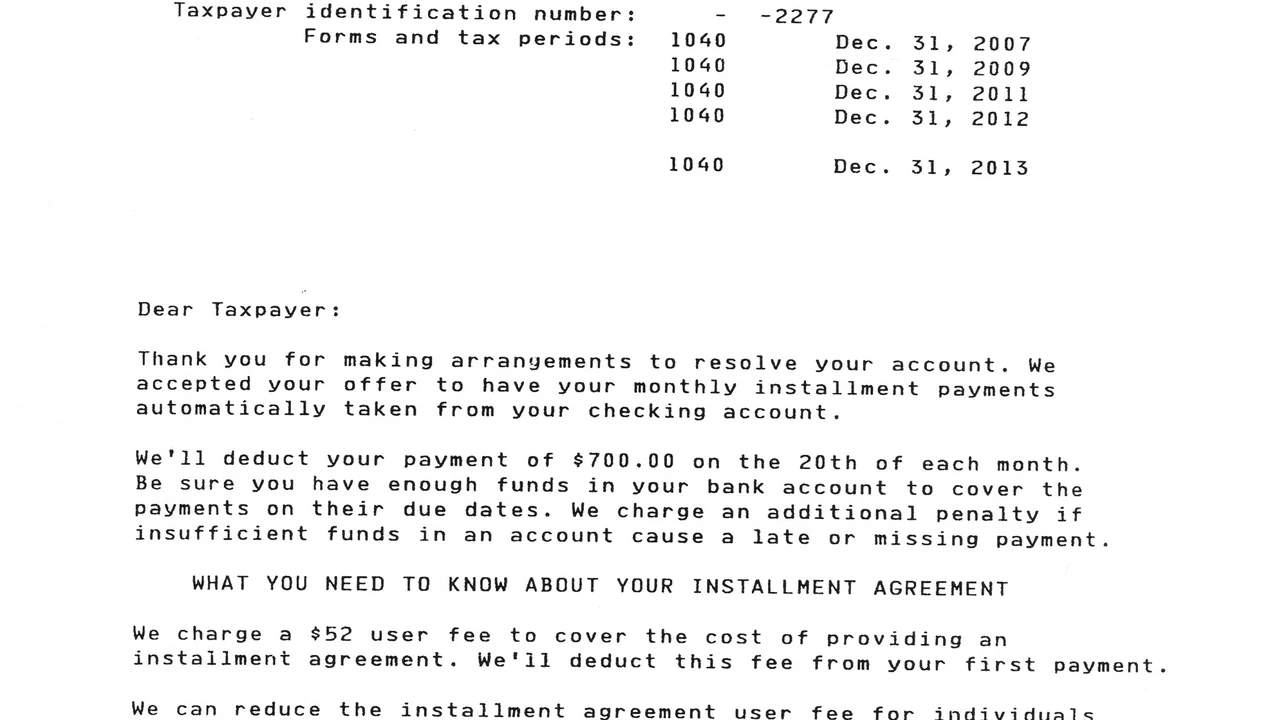
This is perhaps the most common payment plan. An Installment Agreement (IA) allows your business to make monthly payments for up to 72 months (6 years). This is ideal for businesses that need more time to pay off their debt but can afford regular, fixed payments. The IRS will typically require you to be current on all future tax filings and payments once the IA is in place.
There are two main types of Installment Agreements:
Guaranteed Installment Agreement: Simplified Business Tax Debt Resolution
This is available if your business owes $50,000 or less in combined tax, penalties, and interest, and can pay it off within 72 months. The IRS generally won't ask for detailed financial information for this type of agreement, making it simpler to obtain.
Use Case: A small business with a relatively modest tax debt that wants a straightforward payment plan without extensive financial disclosure. Think of a sole proprietorship or a small LLC with a few employees.
Non-Guaranteed Installment Agreement: Flexible Business Tax Debt Solutions
If your business owes more than $50,000 or needs more than 72 months to pay, you'll likely need a non-guaranteed IA. For this, the IRS will require a detailed financial statement (Form 433-B, Collection Information Statement for Businesses) to determine your business's ability to pay. They'll look at your income, expenses, and assets to set an affordable monthly payment.
Use Case: A growing business that experienced a significant downturn, resulting in a larger tax liability. Or a business with complex financial structures that needs a more tailored payment approach.
How to Apply for an Installment Agreement: You'll typically use Form 9465, Installment Agreement Request. For businesses, it's often best to work with a tax professional who can help prepare Form 433-B accurately and negotiate with the IRS on your behalf.
Offer in Compromise OIC: Settling Business Tax Debt for Less
An Offer in Compromise (OIC) allows certain taxpayers to resolve their tax liability with the IRS for a lower amount than what they originally owe. An OIC is generally an option when taxpayers are experiencing significant financial difficulty. The IRS considers your ability to pay, your income, expenses, and asset equity when evaluating an OIC. It's a complex process and not every business qualifies.
Use Case: Your business is facing severe financial hardship, and paying the full tax debt would leave you unable to meet basic living expenses or continue operations. This is often a last resort before considering bankruptcy.
How to Apply: You'll need to submit Form 656, Offer in Compromise, along with Form 433-A (OIC) for individuals or Form 433-B (OIC) for businesses. There's also an application fee. The IRS has an OIC Pre-Qualifier tool on their website to help you determine if you might be eligible.
Currently Not Collectible CNC Status: Temporary Relief for Business Tax Debt
If your business is truly unable to pay its tax debt due to severe financial hardship, the IRS may place your account in Currently Not Collectible (CNC) status. This means the IRS agrees that you cannot pay at this time and will temporarily stop collection efforts. However, interest and penalties continue to accrue, and the IRS will periodically review your financial situation to see if it has improved.
Use Case: Your business has suffered a major setback, like a natural disaster, a significant loss of clients, or a prolonged economic downturn, making it impossible to pay any amount towards your tax debt. This is a temporary reprieve, not a forgiveness of debt.
How to Apply: You'll need to provide extensive financial documentation to the IRS, typically through Form 433-B, demonstrating your inability to pay. This is usually done in conjunction with a tax professional.
Step-by-Step Guide to Establishing a Business Tax Payment Plan with IRS
Navigating the IRS can be tricky, but following these steps will help your business secure a payment plan:
Step 1: Assess Your Business's Financial Situation for Tax Debt
Before you contact the IRS, get a clear picture of your business's finances. Gather all relevant documents:
- Tax returns for the past several years
- Profit and loss statements
- Balance sheets
- Bank statements
- Records of assets and liabilities
- Payroll records (if applicable)
Understand exactly how much your business owes, including penalties and interest. This will help you determine which payment plan is most suitable.
Step 2: Determine the Best Payment Plan Option for Your Business
Based on your financial assessment, decide which of the plans (short-term, installment agreement, OIC, or CNC) aligns best with your business's ability to pay. If you're unsure, a tax professional can provide invaluable guidance.
Step 3: Prepare Necessary Forms and Documentation for IRS Submission
This is where the paperwork comes in. Depending on the chosen plan, you'll need to complete specific IRS forms. For most installment agreements, Form 9465 is required. If your business owes more or you're seeking an OIC or CNC, Form 433-B (Collection Information Statement for Businesses) will be critical. Ensure all information is accurate and complete to avoid delays.
Step 4: Contact the IRS or Your Tax Professional for Business Tax Debt
You can contact the IRS directly via phone (Business and Specialty Tax Line: 800-829-4933) or mail. However, for complex situations, working with a tax professional (like a CPA, Enrolled Agent, or tax attorney) is highly recommended. They can:
- Help you choose the best plan.
- Prepare and submit all necessary forms.
- Communicate and negotiate with the IRS on your behalf.
- Ensure you meet all compliance requirements.
Step 5: Negotiate and Finalize Your Business Tax Payment Plan
The IRS may counter your proposed payment plan. Be prepared to negotiate, especially if you're seeking a non-guaranteed IA or an OIC. Once an agreement is reached, ensure you understand all the terms and conditions, including payment amounts, due dates, and consequences of default. Make sure to get the agreement in writing.
Step 6: Adhere to the Payment Plan and Future Tax Compliance
Once your payment plan is established, it's crucial to make all payments on time. Missing payments can lead to the default of your agreement, and the IRS may resume aggressive collection actions. Furthermore, you must remain current on all future tax filings and payments. This means filing your quarterly estimated taxes (if applicable) and annual returns on time and paying any new tax liabilities.
Specific Products and Tools to Help Manage Business Tax Debt
While the IRS provides the payment plans, several tools and services can help your business manage the process and stay compliant. These aren't 'IRS products' but rather third-party solutions that integrate with tax management.
Tax Software for Business Tax Debt Prevention and Management
Good tax software can help prevent future tax debt by ensuring accurate record-keeping and timely filing. While it won't directly set up an IRS payment plan, it's invaluable for managing your financial data.
-
QuickBooks Online (QBO) with Payroll:
- Description: A comprehensive accounting solution that integrates payroll, making it easier to track and pay payroll taxes. It helps generate accurate financial reports needed for IRS forms.
- Use Case: Small to medium-sized businesses needing robust accounting, invoicing, expense tracking, and payroll management. Helps ensure you're calculating and remitting payroll taxes correctly, a common source of business tax debt.
- Comparison: More feature-rich than basic bookkeeping software, offering a full suite of accounting tools. Its payroll integration is a significant advantage for preventing payroll tax issues.
- Pricing: Starts around $30/month for basic plans, with payroll add-ons increasing the cost (e.g., $45/month + $6/employee for Core Payroll).
-
Xero:
- Description: Cloud-based accounting software popular for its user-friendly interface and strong integration capabilities with other business apps.
- Use Case: Businesses looking for a modern, intuitive accounting platform that can scale. Good for managing general ledger and preparing financial statements for IRS review.
- Comparison: Often cited as a strong competitor to QuickBooks, with a slightly different user experience. Excellent for businesses that prefer a clean, minimalist interface.
- Pricing: Plans range from $15/month to $78/month, with payroll services often integrated via third-party apps.
-
Gusto (for Payroll Tax Management):
- Description: A dedicated payroll service that automates payroll tax calculations, filings, and payments.
- Use Case: Any business with employees. Gusto ensures you're compliant with federal, state, and local payroll tax obligations, significantly reducing the risk of payroll tax debt.
- Comparison: Specializes in payroll, offering more in-depth features for employee management and benefits than general accounting software's payroll add-ons.
- Pricing: Starts around $40/month + $6/employee.
Professional Tax Debt Relief Services: Expert Guidance for Business Tax Debt
When dealing with existing tax debt, especially complex situations, professional help is often indispensable.
-
Tax Attorneys:
- Description: Lawyers specializing in tax law. They can represent your business in audits, appeals, and court, and negotiate complex payment plans or OICs.
- Use Case: Businesses facing large tax debts, payroll tax issues, potential criminal tax charges, or those needing aggressive representation.
- Comparison: Offer legal protection and expertise beyond what an EA or CPA can provide, especially in litigation or complex legal interpretations.
- Pricing: Varies widely, often hourly rates from $200-$500+, or flat fees for specific services (e.g., $3,000-$10,000+ for an OIC).
-
Enrolled Agents (EAs):
- Description: Federally licensed tax practitioners authorized to represent taxpayers before the IRS for tax issues, including audits, collections, and appeals.
- Use Case: Most business tax debt situations, including setting up installment agreements, OICs, and dealing with collection notices. They are often more affordable than tax attorneys.
- Comparison: Specialize solely in tax, offering deep expertise in IRS procedures and regulations. Can represent any taxpayer before the IRS.
- Pricing: Often charge flat fees for specific services (e.g., $1,500-$5,000 for an OIC or complex IA) or hourly rates from $100-$300.
-
Certified Public Accountants (CPAs):
- Description: Licensed accounting professionals who can prepare tax returns, provide financial advice, and represent taxpayers before the IRS (though their representation rights are sometimes more limited than EAs or attorneys).
- Use Case: Businesses needing comprehensive financial planning, tax preparation, and assistance with less complex tax debt issues. Many CPAs specialize in tax resolution.
- Comparison: Broader financial expertise than EAs, often handling both accounting and tax. Good for businesses that want a single professional for all financial needs.
- Pricing: Similar to EAs, with hourly rates from $100-$400 or project-based fees.
Online Tax Resolution Services: Convenient Business Tax Debt Assistance
Several online platforms connect businesses with tax professionals for debt resolution.
-
Optima Tax Relief:
- Description: A well-known tax relief company that offers a range of services, including OICs, installment agreements, and penalty abatement. They employ EAs, CPAs, and tax attorneys.
- Use Case: Businesses looking for a full-service tax relief solution with a structured process. Good for those who prefer a single point of contact for their tax debt issues.
- Comparison: One of the larger, more established firms in the tax relief industry. Offers a free consultation to assess your situation.
- Pricing: Varies significantly based on the complexity of the case, often ranging from $2,000 to $10,000+ for full resolution services.
-
Tax Defense Network:
- Description: Another prominent tax relief company offering similar services to Optima, focusing on helping individuals and businesses resolve tax problems.
- Use Case: Businesses seeking professional help with various IRS issues, from audits to collections.
- Comparison: Similar service model to Optima, often competing on price and customer service. Also offers free consultations.
- Pricing: Comparable to Optima, depending on the services required.
Common Pitfalls to Avoid When Dealing with Business Tax Debt
Even with the best intentions, businesses can make mistakes that complicate their tax debt situation. Here are some to avoid:
Ignoring IRS Notices: The Worst Business Tax Debt Strategy
This is perhaps the biggest mistake. IRS notices don't go away; they escalate. Ignoring them can lead to liens, levies, and even seizure of assets. Always open and respond to IRS correspondence promptly.
Failing to File Future Tax Returns: Compounding Business Tax Debt
Even if you can't pay, always file your tax returns on time. Failing to file can result in additional penalties and can prevent you from qualifying for certain payment plans, like an Installment Agreement or OIC.
Not Being Honest About Your Business's Financial Situation
The IRS requires accurate financial information to determine your ability to pay. Providing false or misleading information can lead to severe penalties, including criminal charges. Be transparent and provide all requested documentation.
Falling for Tax Debt Relief Scams: Protecting Your Business
Be wary of companies that promise unrealistic results, demand upfront fees without providing clear services, or use aggressive sales tactics. Always verify the credentials of any tax professional you consider hiring.
Not Seeking Professional Help Early Enough for Business Tax Debt
Many businesses wait until their tax debt is unmanageable before seeking help. The earlier you engage with a tax professional, the more options you'll likely have and the better the outcome.
Maintaining Compliance After Establishing a Business Tax Payment Plan
Getting a payment plan is a huge step, but maintaining it is equally important. Here's how to stay on track:
Automate Payments: Ensuring Timely Business Tax Debt Remittance
Set up direct debit for your monthly payments. This ensures payments are made on time and you avoid accidental defaults. Most IRS payment plans offer this option.
Regularly Review Your Business's Financial Health
Keep a close eye on your business's cash flow and profitability. If your financial situation changes significantly (for better or worse), you might need to contact the IRS to adjust your payment plan.
Stay Current on All Future Tax Obligations
This cannot be stressed enough. An IRS payment plan requires you to be current on all future tax filings and payments. This includes estimated taxes, payroll taxes, and annual income taxes. Use your accounting software and payroll services to ensure compliance.
Keep Detailed Records of All IRS Communications and Payments
Maintain a dedicated file for all correspondence with the IRS, copies of submitted forms, and records of all payments made. This documentation is crucial if any disputes arise.
Consider Professional Oversight for Ongoing Business Tax Compliance
Many businesses retain their tax professional (CPA, EA, or tax attorney) even after a payment plan is established. They can help with ongoing compliance, annual tax preparation, and advise on any new tax issues that arise, ensuring your business remains in good standing with the IRS.
Dealing with business tax debt is challenging, but with the right approach and understanding of the IRS's payment options, your business can navigate these waters successfully. Remember, proactive communication and diligent adherence to your chosen plan are your best allies.
:max_bytes(150000):strip_icc()/277019-baked-pork-chops-with-cream-of-mushroom-soup-DDMFS-beauty-4x3-BG-7505-5762b731cf30447d9cbbbbbf387beafa.jpg)