Tax Debt Relief for Self Employed Individuals and Freelancers
Specific tax debt relief options and advice for self-employed individuals and freelancers.

Specific tax debt relief options and advice for self-employed individuals and freelancers.
Tax Debt Relief for Self Employed Individuals and Freelancers
Hey there, fellow self-employed folks and freelancers! Let's be real, running your own show is awesome. You get to be your own boss, set your own hours, and pursue your passions. But with all that freedom comes a whole lot of responsibility, especially when it comes to taxes. Unlike traditional employees who have taxes automatically withheld from their paychecks, you're responsible for calculating and paying your own estimated taxes throughout the year. And sometimes, despite your best efforts, things can go sideways. Maybe a big client didn't pay on time, an unexpected expense popped up, or you just miscalculated your income. Whatever the reason, finding yourself with a tax debt can feel like a huge weight. But don't panic! You're not alone, and there are specific tax debt relief options designed just for people like us. This guide is going to walk you through everything you need to know, from understanding why self-employed individuals often face tax debt to exploring the best relief programs and even recommending some tools to help you stay on track.
Why Self Employed Individuals and Freelancers Often Face Tax Debt Challenges
It's not just you. Many self-employed individuals and freelancers find themselves in a pickle with the IRS. There are a few common reasons why this happens, and understanding them can help you prevent future issues. First off, there's the whole estimated tax thing. If you're not making quarterly payments, or if you're underpaying, you're setting yourself up for a big tax bill at the end of the year, often with penalties. It's easy to underestimate your income, especially when it fluctuates. Then there's the self-employment tax, which covers Social Security and Medicare. This is an additional 15.3% on your net earnings, on top of your regular income tax. Many new freelancers don't factor this in, leading to a nasty surprise. Plus, managing business expenses can be tricky. If you're not meticulously tracking deductions, you might end up with a higher taxable income than you anticipated. And let's not forget about unexpected life events – medical emergencies, a dip in client work, or even just forgetting to set aside money for taxes. These can all throw a wrench in your financial planning. The good news is, the IRS understands these challenges and offers various programs to help. Let's dive into what those are.
Understanding IRS Tax Debt Relief Options for the Self Employed
The IRS has several programs that can help you manage or reduce your tax debt. It's crucial to understand which one might be the best fit for your specific situation. These aren't one-size-fits-all solutions, so let's break them down.
Offer in Compromise OIC for Freelancers and Small Business Owners
An Offer in Compromise (OIC) allows certain taxpayers to resolve their tax liability with the IRS for a lower amount than what they originally owe. Essentially, it's a deal where the IRS agrees to accept less than the full amount due when there's doubt as to collectibility, doubt as to liability, or effective tax administration. For self-employed individuals and freelancers, an OIC can be a lifesaver if you're facing significant financial hardship and genuinely can't pay your full tax bill. The IRS looks at your ability to pay, your income, expenses, and asset equity. They want to see that you've explored all other options and that paying the full amount would cause significant financial distress. It's a complex process, often requiring detailed financial statements and a strong case. You'll need to submit Form 656, Offer in Compromise, along with a non-refundable application fee and your initial payment. The IRS will then review your financial situation thoroughly. If accepted, it can provide a fresh start, but it's not guaranteed and can take a long time to process. It's often best to consult with a tax professional when considering an OIC.
Installment Agreements and Payment Plans for Self Employed Tax Debt
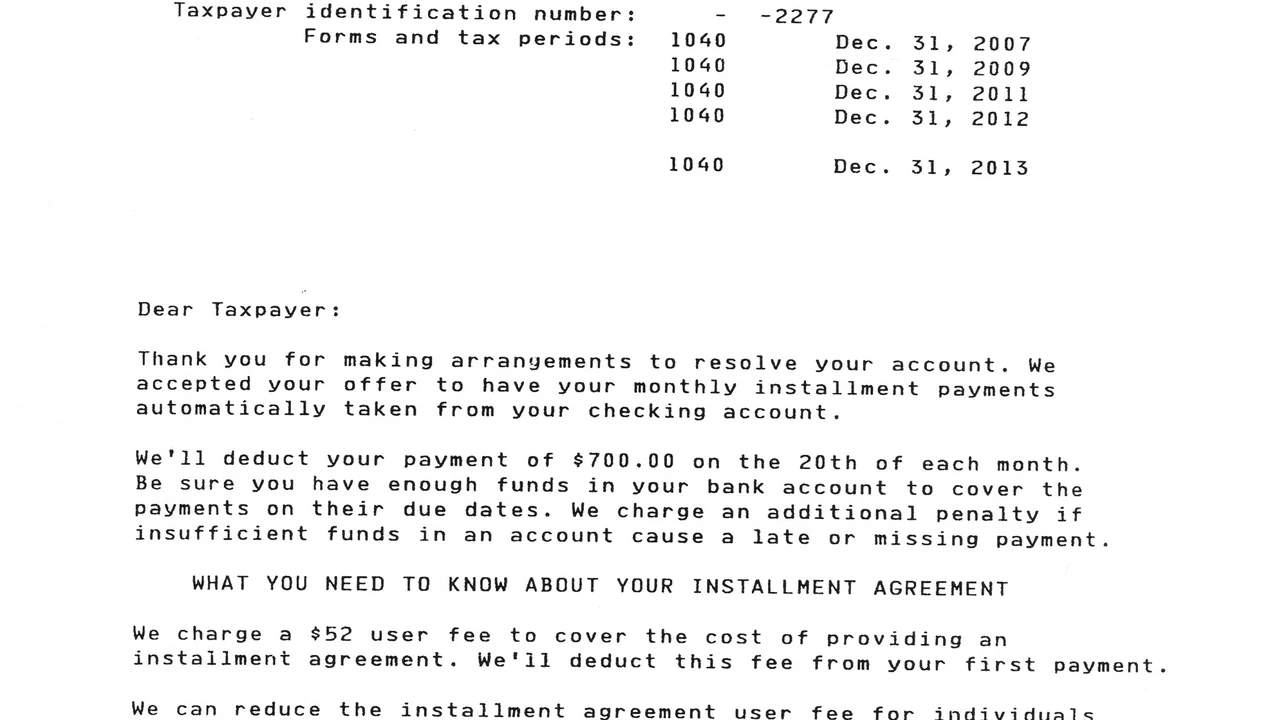
If an OIC isn't feasible or you don't qualify, an Installment Agreement (IA) is a much more common and accessible option. This allows you to make monthly payments to the IRS for up to 72 months (six years). It's essentially a payment plan. If you owe $50,000 or less in combined tax, penalties, and interest, and you've filed all required tax returns, you can usually set up a short-term payment plan (up to 180 days) or a long-term installment agreement online. For self-employed individuals, this can be a great way to manage your tax debt without the immediate pressure of a lump sum payment. While interest and penalties still accrue, they might be at a reduced rate compared to not having a payment plan at all. You can set up an IA directly through the IRS website using the Online Payment Agreement application, or by filling out Form 9465, Installment Agreement Request. This is often the first line of defense for many freelancers facing tax debt.
Currently Not Collectible CNC Status for Financially Strapped Freelancers
If you're truly in a dire financial situation and can't afford to pay your tax debt or even make installment payments, the IRS might place your account in Currently Not Collectible (CNC) status. This means the IRS has determined that you don't have the ability to pay your tax debt at this time. While your account is in CNC status, the IRS will temporarily stop collection efforts, such as levies and garnishments. However, interest and penalties will continue to accrue, and the statute of limitations for collection generally continues to run. The IRS will periodically review your financial situation, usually annually, to see if your circumstances have improved. To qualify for CNC, you'll need to provide detailed financial information, including income, expenses, and assets, to demonstrate your inability to pay. This is a temporary reprieve, not a forgiveness of debt, but it can provide much-needed breathing room during a tough period. It's often initiated after a thorough financial analysis by the IRS or a tax professional.
Penalty Abatement for Self Employed Taxpayers
The IRS can impose various penalties for not filing on time, not paying on time, or not preparing an accurate return. For self-employed individuals, these penalties can add up quickly. However, in certain situations, you might be able to get these penalties abated (removed). There are generally three types of penalty relief: First-Time Abatement (FTA), Reasonable Cause, and Statutory Exception. FTA is often available if you have a clean compliance history for the past three years. Reasonable Cause applies if you can show that you exercised ordinary business care and prudence but were still unable to meet your tax obligations due to circumstances beyond your control (e.g., serious illness, natural disaster, death in the family). Statutory Exception applies when specific provisions of the law provide for penalty relief. For freelancers, demonstrating reasonable cause for underpayment of estimated taxes due to unforeseen income fluctuations or significant business setbacks can sometimes lead to penalty abatement. You'll typically need to write a letter to the IRS explaining your situation and requesting abatement, or fill out Form 843, Claim for Refund and Request for Abatement.
Tools and Software to Prevent and Manage Self Employed Tax Debt
Prevention is always better than cure, especially when it comes to tax debt. For self-employed individuals and freelancers, having the right tools can make a world of difference in managing your finances, tracking income and expenses, and ensuring you're prepared for tax season. Let's look at some popular options that can help you stay on top of your tax obligations and potentially avoid future debt.
Accounting Software for Freelancers and Small Businesses
Good accounting software is your best friend for tracking income, expenses, and generating reports that make tax time a breeze. It helps you categorize transactions, reconcile bank accounts, and even send invoices. Here are a few top contenders:
QuickBooks Self-Employed
- Description: Designed specifically for freelancers and independent contractors, QuickBooks Self-Employed helps you track income and expenses, separate business and personal transactions, estimate quarterly taxes, and find potential tax deductions. It integrates with popular banking apps and payment platforms.
- Key Features: Expense tracking, mileage tracking, invoice creation, quarterly tax estimates, receipt capture, direct integration with TurboTax Self-Employed for easy filing.
- Use Case: Perfect for individual freelancers, gig workers, and independent contractors who need a straightforward way to manage their business finances and prepare for taxes without the complexity of full-fledged business accounting software.
- Pros: User-friendly interface, strong tax estimation features, excellent integration with TurboTax, good for separating business and personal finances.
- Cons: Can be a bit pricey for basic features, might lack some advanced accounting functionalities needed for growing businesses.
- Pricing: Starts around $15-$25 per month, often with introductory discounts.
FreshBooks
- Description: FreshBooks is a cloud-based accounting software known for its intuitive invoicing features. It's great for service-based businesses and freelancers who need to send professional invoices, track time, and manage expenses.
- Key Features: Invoicing, expense tracking, time tracking, project management, payment processing, financial reporting, client management.
- Use Case: Ideal for creative professionals, consultants, designers, and anyone who bills clients by the hour or project and needs robust invoicing capabilities.
- Pros: Excellent invoicing and payment collection, user-friendly, good customer support, strong time tracking.
- Cons: Less robust inventory management compared to some competitors, tax features are good but not as specialized as QuickBooks Self-Employed for estimated taxes.
- Pricing: Starts around $15-$20 per month for the Lite plan, with higher tiers offering more features.
Wave Accounting
- Description: Wave offers free accounting, invoicing, and receipt scanning software, making it a fantastic option for budget-conscious freelancers and very small businesses. They make money through payment processing and payroll services.
- Key Features: Free accounting software, free invoicing, receipt scanning, basic financial reporting, bank and credit card connections.
- Use Case: Best for new freelancers, side hustlers, or small businesses with simple accounting needs who want to keep costs down.
- Pros: Completely free for core accounting features, easy to use, good for basic expense tracking and invoicing.
- Cons: Limited integrations, customer support can be slower due to the free model, not as feature-rich as paid alternatives.
- Pricing: Free for accounting, invoicing, and receipt scanning. Payment processing and payroll services have fees.
Tax Preparation Software for Self Employed Filers
When it comes to actually filing your taxes, specialized software can guide you through the process, help you find deductions, and ensure accuracy. For self-employed individuals, choosing the right version is key.
TurboTax Self-Employed
- Description: TurboTax Self-Employed is a premium version of TurboTax specifically designed for freelancers, independent contractors, and small business owners. It helps you report all your self-employment income and expenses, find industry-specific deductions, and calculate self-employment taxes.
- Key Features: Step-by-step guidance for self-employment income and expenses (Schedule C), deduction finder, mileage tracking import, asset depreciation, expert review options.
- Use Case: Ideal for any self-employed individual or freelancer who wants comprehensive guidance and maximum deduction finding, especially if they have complex business expenses or multiple income streams.
- Pros: Extremely user-friendly, excellent for maximizing deductions, integrates seamlessly with QuickBooks Self-Employed, offers expert help.
- Cons: Can be expensive, especially for state filings and additional features.
- Pricing: Typically ranges from $90-$120 for federal, plus state filing fees (prices vary annually and with promotions).
H&R Block Self-Employed
- Description: H&R Block's Self-Employed online tax software offers robust features for freelancers and small business owners, including guidance on Schedule C, business deductions, and self-employment taxes.
- Key Features: Guidance for self-employment income and expenses, deduction maximizer, access to tax professionals, audit support, import from other tax software.
- Use Case: A strong alternative to TurboTax for self-employed individuals looking for comprehensive tax preparation with good support options.
- Pros: Competitive pricing, good user interface, strong support options including in-person help, robust deduction finding.
- Cons: Some users find the interface slightly less intuitive than TurboTax, but it's still very good.
- Pricing: Typically ranges from $80-$110 for federal, plus state filing fees (prices vary annually and with promotions).
TaxAct Self-Employed
- Description: TaxAct Self-Employed is often a more budget-friendly option that still provides comprehensive features for self-employed individuals, including support for Schedule C and various business deductions.
- Key Features: Guidance for self-employment income and expenses, deduction maximizer, prior year data import, audit defense options.
- Use Case: Good for self-employed individuals who want a cost-effective solution without sacrificing essential features for filing their business taxes.
- Pros: Generally more affordable than TurboTax or H&R Block, still offers good guidance for self-employment.
- Cons: User interface might feel a bit dated compared to competitors, customer support can be less extensive.
- Pricing: Typically ranges from $60-$80 for federal, plus state filing fees (prices vary annually and with promotions).
Estimated Tax Payment Calculators and Reminders
One of the biggest challenges for freelancers is remembering to pay estimated taxes and calculating the correct amount. These tools can be invaluable:
IRS Tax Withholding Estimator
- Description: While primarily for W-2 employees, the IRS Tax Withholding Estimator can be adapted for self-employed individuals to get a general idea of their tax liability. It helps you determine how much tax to have withheld or how much to pay in estimated taxes.
- Key Features: Interactive tool, considers various income sources, deductions, and credits.
- Use Case: A free, official IRS tool to get a baseline estimate of your tax liability.
- Pros: Free, direct from the IRS, relatively easy to use.
- Cons: Not specifically designed for complex self-employment scenarios, requires manual input of estimated income and expenses.
- Pricing: Free.
FlyFin
- Description: FlyFin is an AI-powered tax engine combined with human CPAs designed specifically for freelancers and self-employed individuals. It automatically finds deductions and helps with quarterly tax estimates.
- Key Features: AI-powered expense tracking and deduction finding, human CPA review, quarterly tax estimates, tax filing.
- Use Case: Ideal for freelancers who want a hands-off approach to expense tracking and tax estimation, with the added benefit of CPA expertise.
- Pros: Automates deduction finding, human CPA support, helps with estimated taxes, can save a lot of time.
- Cons: Subscription cost can be higher than basic accounting software.
- Pricing: Starts around $19 per month for basic features, with higher tiers for more comprehensive CPA support and filing.
Stride Tax
- Description: Stride Tax is a free app that helps freelancers track mileage, expenses, and find deductions. It also provides estimated tax calculations and reminders for quarterly payments.
- Key Features: Mileage tracking, expense tracking, deduction identification, estimated tax calculator, quarterly payment reminders.
- Use Case: Great for freelancers who need a simple, free tool to track deductions and get reminders for estimated taxes.
- Pros: Free, easy to use, focuses on key freelancer tax needs.
- Cons: Less comprehensive than full accounting software, primarily focused on deductions and estimates rather than full accounting.
- Pricing: Free.
Working with Tax Professionals for Self Employed Tax Debt
Sometimes, trying to navigate tax debt on your own can feel overwhelming, especially with the complexities of self-employment taxes. That's where tax professionals come in. They can offer invaluable guidance, represent you before the IRS, and help you secure the best possible outcome.
Enrolled Agents EAs for Freelancer Tax Debt Resolution
Enrolled Agents (EAs) are tax professionals authorized by the U.S. Department of the Treasury to represent taxpayers before the IRS. They specialize in taxation and can handle all tax matters, including audits, collections, and appeals. For self-employed individuals, an EA can be a fantastic resource because they understand the intricacies of Schedule C, self-employment taxes, and common freelancer deductions. They can help you prepare an OIC, negotiate an installment agreement, or represent you if you're facing an audit. EAs are often a more cost-effective option than tax attorneys for many tax debt situations.
Certified Public Accountants CPAs Specializing in Self Employment
Certified Public Accountants (CPAs) are licensed accounting professionals who can provide a wide range of financial services, including tax preparation, financial planning, and business consulting. While not all CPAs specialize in tax debt resolution, many do, especially those who work with small businesses and self-employed clients. A CPA can help you analyze your financial situation, identify potential tax savings, and advise on the best course of action for your tax debt. They can also help you set up better accounting practices to prevent future debt. If your tax debt is intertwined with broader business financial issues, a CPA might be the right choice.
Tax Attorneys for Complex Self Employed Tax Debt Cases
For more complex or severe tax debt situations, such as those involving criminal tax charges, significant audits, or disputes that might end up in tax court, a tax attorney is often the best choice. Tax attorneys have a law degree and specialize in tax law. They can provide legal advice, represent you in court, and protect your rights. While generally more expensive than EAs or CPAs, their legal expertise can be crucial in high-stakes situations. If you're facing aggressive collection actions, have a history of non-compliance, or believe the IRS has made a legal error, a tax attorney can be your strongest advocate.
Strategies to Prevent Future Tax Debt as a Freelancer
Once you've dealt with your current tax debt, the goal is to avoid it happening again. Here are some proactive strategies for self-employed individuals and freelancers:
Accurate Estimated Tax Payments for Self Employed Income
This is probably the most critical step. Make sure you're accurately estimating your income and expenses throughout the year and making your quarterly estimated tax payments on time. Use the tools mentioned above, or consult with a tax professional to help you calculate these amounts. The IRS Form 1040-ES provides worksheets to help you figure out your estimated tax. Remember, if you expect to owe at least $1,000 in tax for the year, you generally need to pay estimated taxes.
Dedicated Savings for Self Employment Taxes
Open a separate savings account specifically for your taxes. As soon as you get paid, transfer a percentage of that income into this account. Many freelancers aim for 25-35% of their gross income, but this can vary based on your income level, deductions, and state taxes. Having this money set aside makes it much easier to make those quarterly payments without feeling a pinch.
Meticulous Record Keeping for Freelance Expenses and Income
Keep detailed records of all your income and expenses. Use accounting software, spreadsheets, or even a simple notebook. Track every business-related expense, no matter how small, as these can add up to significant deductions. Keep receipts, invoices, and bank statements organized. Good record-keeping not only helps you calculate your taxes accurately but also provides crucial documentation if you ever face an audit.
Understanding and Maximizing Self Employed Tax Deductions
As a freelancer, you have access to many deductions that traditional employees don't. These can significantly lower your taxable income. Common deductions include home office expenses, health insurance premiums, self-employment tax deduction (half of what you pay), business travel, professional development, software subscriptions, and supplies. Make sure you understand what you can deduct and keep records to support these claims. A tax professional can help you identify all eligible deductions.
Regular Financial Reviews and Adjustments for Freelancers
Don't just set it and forget it. Review your income and expenses regularly, perhaps monthly or quarterly. If your income significantly increases or decreases, adjust your estimated tax payments accordingly. This proactive approach prevents surprises at tax time and helps you maintain better control over your financial health.
Final Thoughts on Self Employed Tax Debt Relief
Dealing with tax debt as a self-employed individual or freelancer can be stressful, but it's a solvable problem. The key is to act quickly, understand your options, and not be afraid to seek professional help. Whether it's an Offer in Compromise, an Installment Agreement, or simply getting your account into Currently Not Collectible status, there's a path forward. And remember, once you've navigated the immediate challenge, focus on implementing strong financial habits and using the right tools to prevent future tax debt. You've got this!
:max_bytes(150000):strip_icc()/277019-baked-pork-chops-with-cream-of-mushroom-soup-DDMFS-beauty-4x3-BG-7505-5762b731cf30447d9cbbbbbf387beafa.jpg)